
Sundri Uttamchandani (1924–2013) was one of the most distinguished voices of modern Sindhi literature. A novelist, short-story writer, poet, playwright, essayist and translator, she devoted more than six decades to enriching Sindhi language and literature.
Writing at a time when the literary world was largely male-dominated, Sundri brought a powerful woman’s perspective to Sindhi writing. Her works sensitively portray Partition and displacement, women’s lives, changing family relationships, social realities and human dignity, using the natural and expressive language of everyday Sindhi homes.
Recipient of the Sahitya Akademi Award in 1986 for Vichhoro and several other honours, Sundri Uttamchandani remains an important figure in Indian literature. Her writings continue to preserve the memories, language and cultural experiences of generations of Sindhis and inspire readers and writers today.
In 2000, the distinguished Sindhi literary periodical Koonj, founded and edited by noted writer and publisher Hari Motwani, devoted its special annual issue to Sundri Uttamchandani. The volume is an important documentary source on Sundri's literary life and creative philosophy. It includes Sundri's own reflections on her “World of Creation,” offering rare insights into her childhood, imagination, creative process and experience of displacement, as well as an illuminating interview conducted by Dr. Moti Prakash.
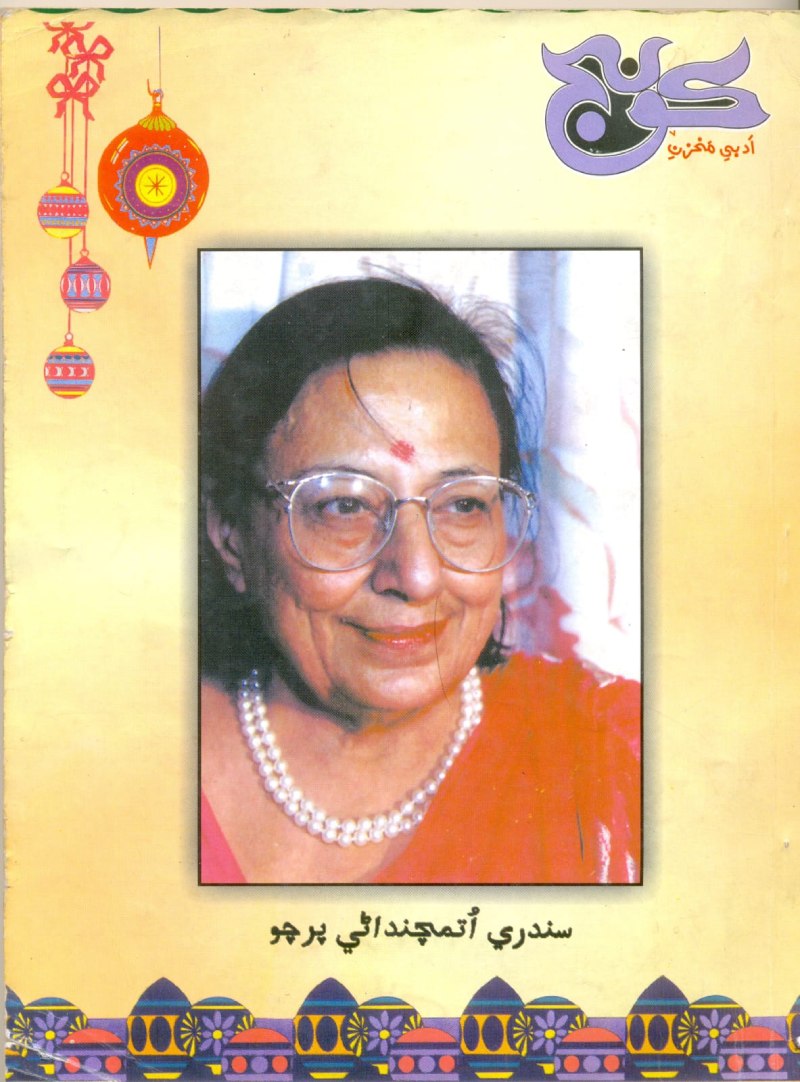
Sundri Uttamchandani (1924–2013) was a pioneering and celebrated voice of modern Sindhi literature. An award-winning novelist, short-story writer, poet and translator, her works vividly portray women’s lives, Partition, displacement and the changing Sindhi society.
Sundri Uttamchandani was born on 28 September 1924 in Hyderabad, Sindh, then a flourishing centre of education, literature and culture in undivided India. Growing up in a large joint family, she was surrounded by books, folk tales, mythology and religious stories. Her mother’s engaging way of narrating and interpreting stories particularly influenced Sundri’s early love for literature and storytelling.
Sundri’s formative years coincided with India’s freedom movement, which deeply influenced her ideas about equality, social justice and freedom. Her literary journey began during her college years with the translation of a Russian short story, Bhadur Maao Ji Bahadur Deeah (“A Brave Daughter of a Brave Mother”), published in her college magazine.
In November 1947, Sundri married A. J. Uttam (Assandas Jethanand Uttamchandani), a freedom fighter, progressive writer and prominent figure in Sindhi literature. Their marriage developed into a lifelong literary partnership.
Following Partition, Sundri migrated from Sindh to India. After brief stays in Indore and Baroda, the family settled in Bombay (Mumbai). The experience of leaving Sindh, displacement and rebuilding life in India profoundly influenced her writing and became an important theme in many of her stories.
Born on 28 September in Hyderabad, Sindh
Began her literary career; first short story appeared in Sathi
Married A.J. Uttam; subsequently settled in India after Partition
Published her first novel, Kirandar Deewaroon
Published her second novel, Preet Purani Reet Niralee
Published Bhoori; received the Soviet Land Nehru Peace Award
Published Bandhan
Received the Sahitya Akademi Award for Vichhoro
Received the Gaurav Puraskar from the Government of Maharashtra
Received the Lifetime Achievement Award from NCPSL
Received Citation and Cash Prize from Sindhi Akademi, Delhi
Passed away on 8 July in Mumbai, India